

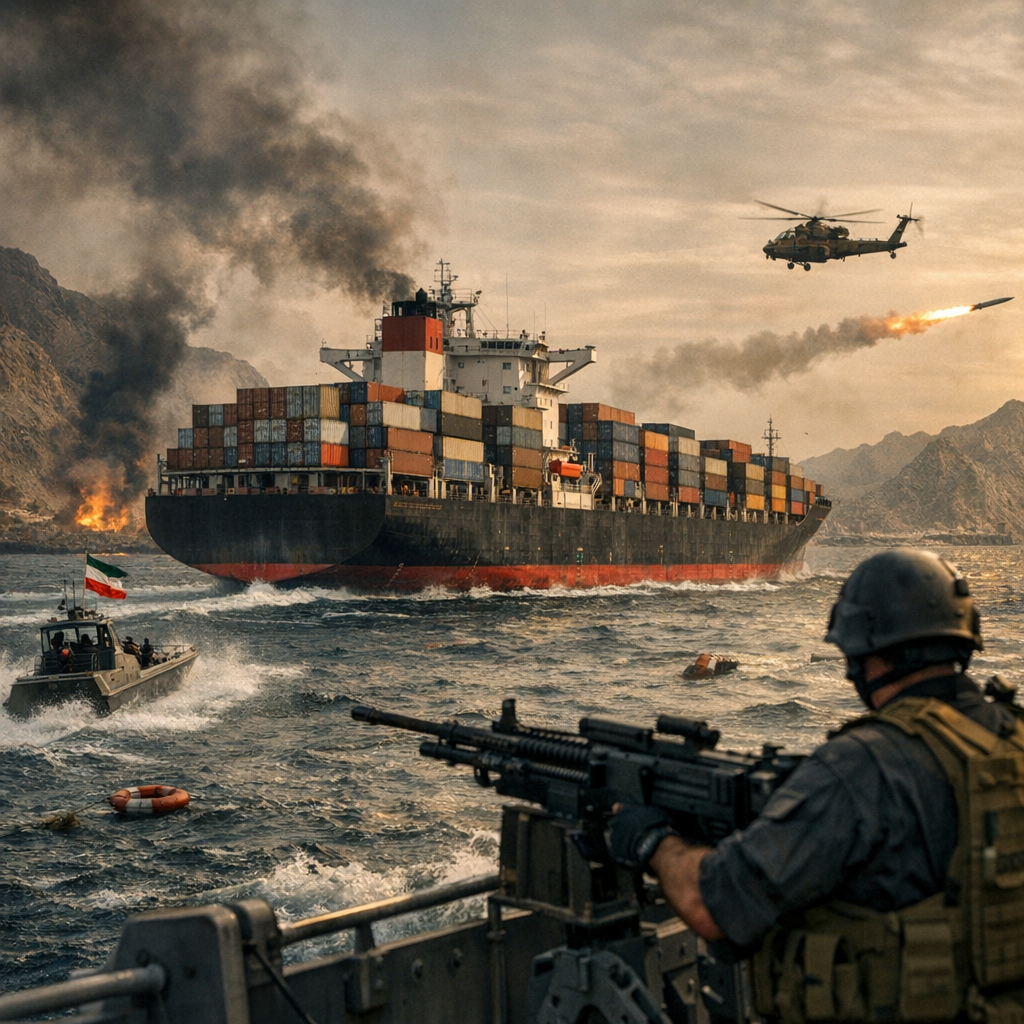
In the ongoing conflict between the United States and Iran, the Strait of Hormuz has become a focal point with far-reaching implications for the global economy, regional security, and international diplomacy.
Why the Strait of Hormuz Matters
The Strait of Hormuz is one of the world’s most critical shipping routes. Nearly 20% of global oil and liquefied natural gas (LNG) trade typically flows through its waters. When Iran closed portions of the strait in recent months, it significantly disrupted global fuel markets and supply chains, pushing energy prices upward. Efforts since then to establish alternate shipping pathways through Iran’s and Oman’s territorial waters are underway.
Diplomatic Undercurrents Amid Conflict
Despite the collapse of a ceasefire framework in June, diplomatic efforts have not ceased. Talks with Oman are exploring mechanisms to reopen the strait and lift blockades. Meanwhile, the United Nations has publicly urged all parties to respect international humanitarian laws and to protect vital infrastructure like hospitals and water systems.
Regional and Global Fallout
The ripple effects extend beyond the Gulf. Countries across the Middle East—including Bahrain, Kuwait, Saudi Arabia, Qatar, Jordan, Iraq, Syria, and the United Arab Emirates—have felt the strain through disrupted trade, rising fuel costs, and threats to humanitarian access.
Widening regional instability has also stressed global food and energy systems, especially as weather events like El Niño threaten to worsen shortages of fertilizer and agricultural inputs for vulnerable nations.
Why This Matters for Forest Lake and the U.S.
Even here in Forest Lake, Minn., we feel these shifts through higher fuel costs, groceries impacted by global supply chains, and more uncertainty in economic forecasting. Our local economy—like many everywhere—is tied into this broader web.
The coming weeks could see renewed diplomatic momentum. But unless a stable agreement is reached, disruptions are likely to persist, with implications for global trade, energy pricing, and the human cost across the region.