

By Michael Williams
Feeling the Disconnect
During the recent survey on parks, trails, and open spaces, I saw something striking: nearly 73% of teenagers in Forest Lake said there aren’t enough opportunities for them in these areas. Pre-teens followed at about 62%, while seniors and adults were much more evenly split in their opinions. Safe crossings, busy roads, and gaps in trail links also came up repeatedly as reasons people don’t use trails more often. These aren’t minor complaints. They speak to how many feel isolated or underserved in parts of our city. (survey data: City of Forest Lake Parks, Trails & Open Space survey)
What Separation Looks Like in Everyday Life
Imagine a parent wanting to take their teenage child out for a walk or bike ride. Downtown Forest Lake has charm but lacks pleasant walking loops and smooth, inviting links to trails like Hardwood Creek. Retail corridors are cut off from Lakeside Memorial Park by large parking lots, not paths. For anyone who isn’t driving, these gaps can feel like barriers—especially for those with mobility challenges or limited transportation. (based on “Opportunities and Constraints” in Forest Lake’s downtown plan)
Why Generational Inclusion Matters
Teens need spaces where they can belong—somewhere more than school ballfields or screen time. Seniors often want safe, walkable areas and social hubs, especially those living alone or with special needs. When these groups feel left out, community fabric weakens. Isolation increases. And the energy of shared spaces—of intergenerational conversation and presence—goes missing.
Steps Toward Bridging the Gaps
- Build more “looped” walking circuits downtown and in neighborhoods—safe, accessible, scenic routes that connect parks, shops, and public gathering spots.
- Improve crossings and sidewalks so residents can move comfortably without a car—especially between commercial areas and green space.
- Create gathering spaces designed for all ages: shaded benches, art walls, weekend markets—places where teens, seniors, and families naturally cross paths.
- Bring neighbors into the planning early, especially younger people and those often unheard—listen to what they want in their surroundings.
- Program for connection—festivals, arts in the park, senior-teen mentorships—opportunities that encourage relationships as city assets, not afterthoughts.
Moving Toward Belonging
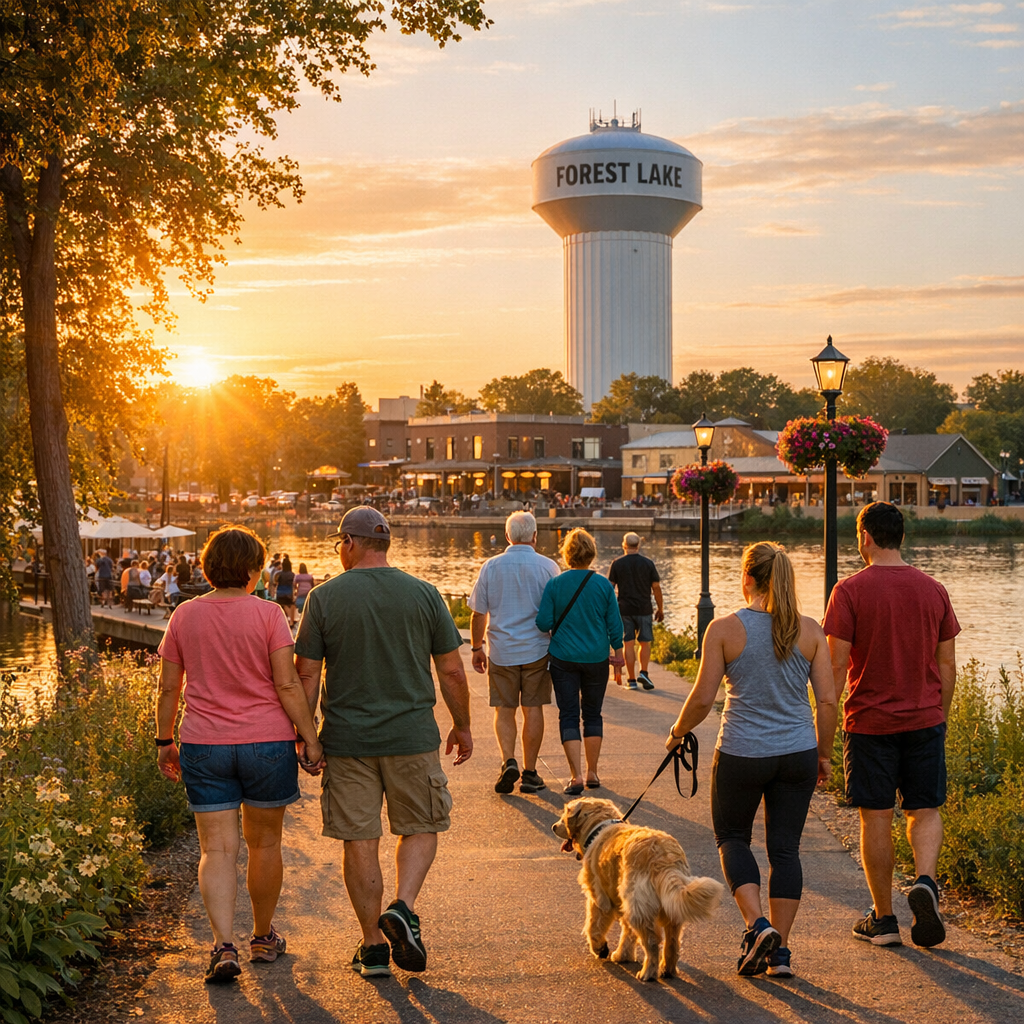
I love Forest Lake for its lakes, trails, and community spirit—but loving a place doesn’t stop us from seeing where it could feel more whole. When our teens can walk safely to a downtown corner café, when our seniors have shaded spots to chat and watch life go by, when our neighbors with mobility challenges feel included in how sidewalks and stairs are built—these aren’t luxuries. These are basics of belonging.
If we work together—developers, city council, volunteers—we can make spaces that don’t just look good on maps, but that feel welcoming, shared, and rooted in the life of every Forest Lake resident.